 Save to Pinterest
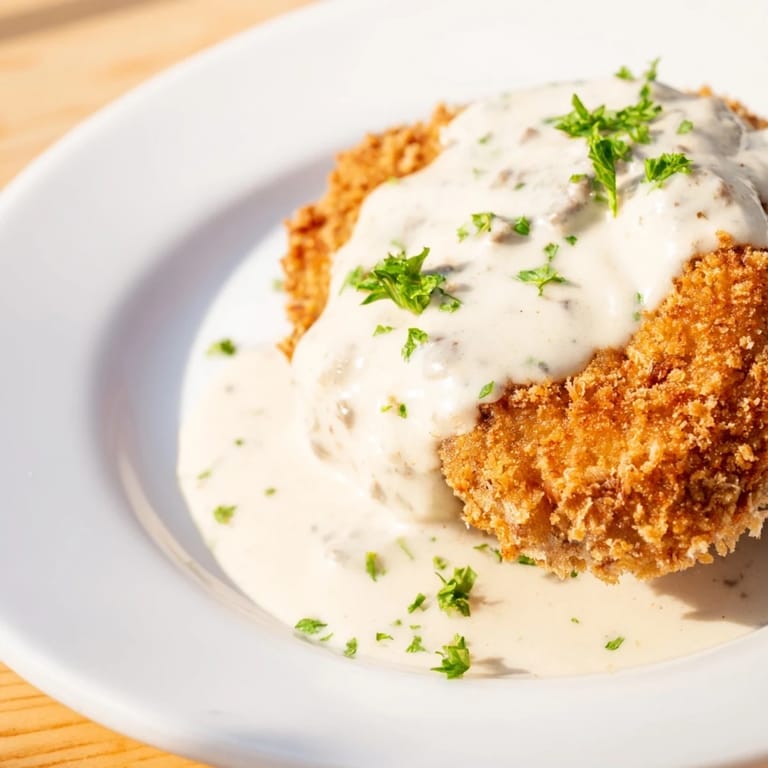
 My grandmother's kitchen always smelled like hot oil and paprika when she was making her chicken fried steak, and somehow that aroma became my definition of Sunday dinner. She'd pull those cube steaks from the icebox, pat them methodically with paper towels, and hum while she set up her breading station—three bowls lined up like soldiers. I watched her hands work that breading technique for years before I understood it wasn't just cooking; it was a kind of gentle ritual that turned a humble cut of meat into something golden and crackling and impossible to resist.
I once made this for a potluck where I didn't know anyone, and watching people's faces light up when they bit into that first piece—the contrast of crispy outside and tender meat—made me realize this dish is basically a conversation starter on a plate. Someone asked for the recipe before they'd even finished eating, and that's when I knew I'd found something worth protecting.
Ingredients
- Beef cube steaks: These are already tenderized by the butcher, which is the whole point—they cook fast and stay tender even when you bread and fry them.
- All-purpose flour: The foundation of your crust; mixing it with spices means flavor in every layer.
- Eggs and whole milk: The egg mixture should be loose and forgiving, almost paint-like, so it helps the breadcrumbs stick without weighing anything down.
- Breadcrumbs: Panko works beautifully for extra crunch, but regular breadcrumbs are just as good—the secret is pressing gently as you coat so they adhere without crushing.
- Garlic powder, onion powder, paprika, cayenne: These four are non-negotiable; they live in the flour and make your crust taste intentional.
- Vegetable oil: You need enough to shallow-fry; the oil temperature is everything, so don't skimp on checking it.
- Whole milk and butter: For a gravy that tastes like it took hours but actually takes minutes.
Tired of Takeout? 🥡
Get 10 meals you can make faster than delivery arrives. Seriously.
One email. No spam. Unsubscribe anytime.
Instructions
- Dry your steaks like you mean it:
- Paper towels aren't just for show—moisture is the enemy of crispiness, so pat each steak until it feels dry to the touch, then let them sit uncovered for a minute while you set up your station.
- Build your breading station with intention:
- Line up three shallow bowls: the first with seasoned flour (don't skip the spices), the second with beaten eggs loosened with a splash of milk, and the third with breadcrumbs. Having this ready means you can move quickly and keep the rhythm smooth.
- Coat each steak with purpose:
- Flour first, shaking off excess, then dip into the egg mixture—let it drip slightly—then press gently into breadcrumbs so they stick without clumping. If you have a second person, one can do the dipping while the other handles the pan.
- Get your oil hot and ready:
- Pour enough vegetable oil into your skillet to reach about half an inch up the sides, then heat it over medium-high until a tiny piece of bread sizzles immediately when it touches the oil. This is your signal that you're ready.
- Fry with patience and presence:
- Work in batches so the pan doesn't crowd; slide each steak in gently and listen for the sizzle. Three to four minutes per side is your target—you're looking for deep golden brown, not pale or burnt, and the meat should feel firm but still give slightly when pressed.
- Make a gravy that tastes like love:
- Leave about three tablespoons of the flavorful oil in the pan, then sprinkle flour over it and whisk for a full minute until it smells toasted and nutty. Gradually whisk in cold milk to avoid lumps, scraping up those beautiful browned bits from the bottom—that's liquid gold in your gravy.
- Simmer until silky:
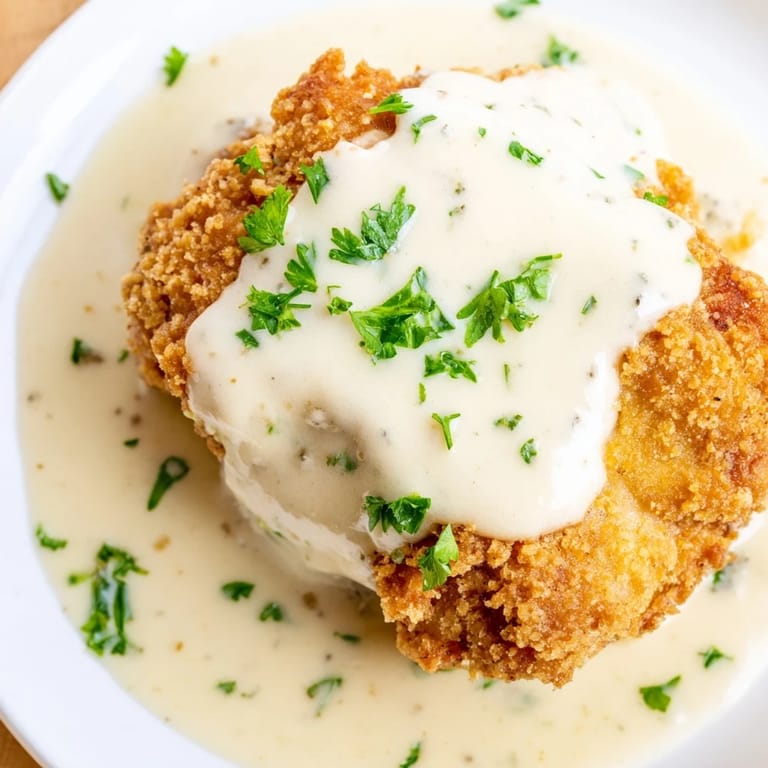
- Keep whisking and let it bubble gently for three to five minutes until it coats the back of a spoon and flows like cream. Taste and adjust salt and pepper at the end.
 Save to Pinterest
 There's a moment, usually right when the gravy is simmering and the steaks are resting on their warm plate, when the whole kitchen smells so good that everyone stops talking and just breathes in. That's when you know you've made something real.
The Breading Technique That Changes Everything
The difference between a steak that shatters when you cut into it and one that feels heavy on the plate is all about the breading. You're not just coating the meat; you're creating a barrier that will trap heat and turn golden at the exact right moment. The egg mixture is the glue—it needs to be thin enough to flow like water but thick enough to hold the breadcrumbs. I learned to use a fork to lift each steak so the excess egg mixture drips away, leaving just enough to make the breadcrumbs stick without creating a gummy layer underneath.
Why Oil Temperature Is Your Best Friend
Hot oil sounds aggressive, but it's actually your gentlest option—it cooks the outside so fast that the inside stays tender. If the oil isn't hot enough, the steak absorbs grease instead of frying, and you end up with something that tastes heavy. If it's too hot, the crust burns while the inside is still cold. I test mine with the breadcrumb trick: drop a tiny piece in the oil and count how fast it turns golden. If it takes more than a few seconds, wait a bit longer.
Sides That Complete the Story
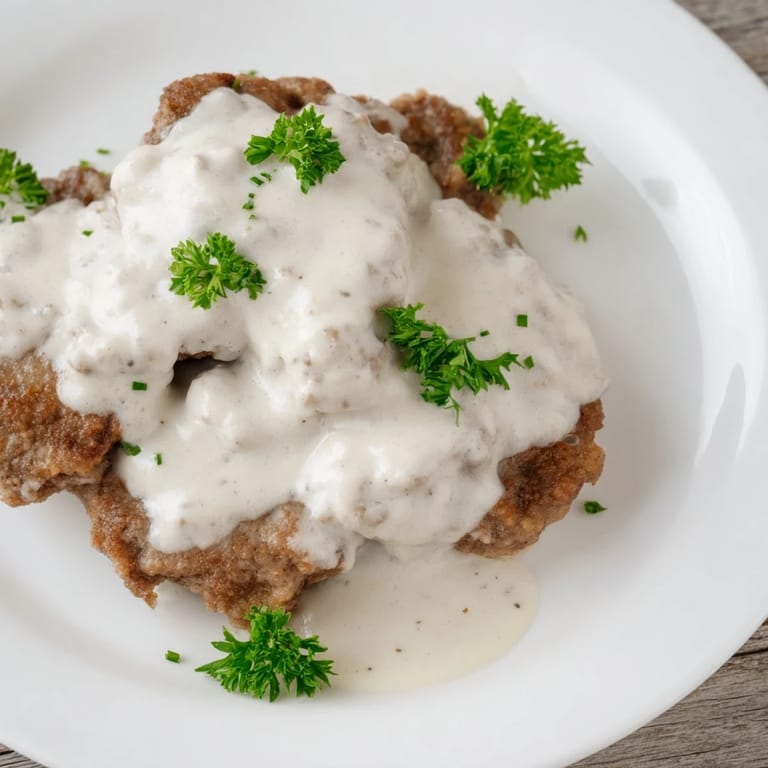
This dish deserves a plate that knows how to support it. Creamy mashed potatoes are the classic choice—they soak up gravy like they were made for it—but steamed green beans cut with a little butter add a brightness that feels necessary. A simple salad with vinegar-based dressing can cut through the richness if you want something lighter, and warm biscuits are never a mistake.
- Mashed potatoes made with butter and a splash of the cooking milk taste best when you make them while the steaks are resting.
- Green beans seasoned with garlic and a touch of lemon feel like a gentle counterpoint to the heaviness of fried food.
- If you have time, a simple coleslaw with vinegar and a whisper of sugar feels refreshing alongside the warm, rich gravy.
 Save to Pinterest
 This is the kind of food that brings people back to your table—not because it's complicated, but because it tastes like someone cared enough to take the time. That's worth something.
Recipe Questions
- → How do I achieve a crispy crust on the steak?
Dredge the steaks sequentially in seasoned flour, beaten egg mixture, and breadcrumbs, pressing gently to adhere. Fry in hot oil until golden on both sides for the best crispiness.
- → Can I make a gluten-free version?
Yes, substitute all-purpose flour and breadcrumbs with gluten-free alternatives to maintain the texture while accommodating dietary needs.
- → What is the best way to prepare the creamy white gravy?
Use pan drippings or butter, whisk in flour and cook briefly, then gradually add milk while whisking until thickened. Season with salt and pepper to taste.
- → How can I add extra flavor to the dish?
Include a pinch of smoked paprika in the gravy or sprinkle chopped fresh parsley over the finished steaks for enhanced aroma and taste.
- → What sides pair well with this dish?
Mashed potatoes and steamed green beans complement the fried steaks and creamy gravy, balancing richness with fresh, simple vegetables.