 Save to Pinterest
 My neighbor stopped by one Tuesday evening with a jar of homemade basil pesto, and I suddenly had to figure out what to do with it before it oxidized to brown. Rather than make the usual pasta, I thought about layering it onto something crispy and golden—and that's when pesto chicken Parmesan was born in my kitchen. The combination felt so natural, like two dishes that had been waiting to meet all along. What started as a kitchen puzzle became something I now make whenever I want to feel like I'm doing something special without the fuss.
I made this for my sister's book club dinner once, and it became the thing everyone asked me to bring to every gathering after that—the unexpected hero of the potluck table. Watching people's faces light up when they cut into the cheese and pesto layers made me realize how much joy a simple dinner plate can hold.
Ingredients
- Boneless, skinless chicken breasts (4): The blank canvas here, and pounding them to even thickness keeps them from turning into rubbery hockey pucks while the cheese melts on top.
- All-purpose flour (1/2 cup): This creates the first barrier between your chicken and the egg wash, helping everything stick without sliding around.
- Large eggs (2): Beat these until they're pale and slightly frothy—they're the glue holding your breadcrumb coat onto the chicken.
- Italian breadcrumbs (1 cup): They already have garlic and herbs baked in, so you're adding flavor before the chicken even hits the skillet.
- Olive oil (2 tablespoons): Use a good-quality oil here since you'll taste it, and medium-high heat keeps it from burning before the chicken browns.
- Basil pesto (1/2 cup): Store-bought works beautifully, but if you have fresh basil and a food processor, homemade pesto makes people think you spent hours in the kitchen.
- Marinara sauce (1 cup): Choose one that tastes like someone actually cooked tomatoes rather than boiled them—it changes everything.
- Mozzarella cheese, shredded (1 cup): The melty, stretchy layer that makes this dish feel indulgent, and shredding your own (rather than pre-shredded) helps it melt more smoothly.
- Parmesan cheese, grated (1/2 cup): This adds that sharp, salty note that keeps the dish from feeling one-dimensional.
- Fresh basil leaves (optional): A handful on top at the end brings brightness and reminds everyone they're eating something alive, not processed.
Tired of Takeout? 🥡
Get 10 meals you can make faster than delivery arrives. Seriously.
One email. No spam. Unsubscribe anytime.
Instructions
- Heat your oven and prep your chicken:
- Start by preheating to 375°F and laying your chicken breasts on a cutting board, then pound them gently with a meat mallet until they're about three-quarters of an inch thick all over. This takes less than a minute per breast but prevents dry patches when the cheese finishes cooking.
- Season and set up your breading station:
- Sprinkle salt and pepper on both sides of the chicken, then arrange three shallow dishes in a row with flour, beaten eggs, and Italian breadcrumbs. Having everything lined up keeps you from second-guessing yourself and makes the process feel almost meditative.
- Bread each piece with intention:
- Coat each breast in flour first, tap off the excess, then dip it in egg until it's fully covered, and finally roll it through the breadcrumbs while pressing gently so they stick. You'll feel the coating get thicker and more substantial with each step.
- Sear in a hot skillet:
- Heat olive oil in a large skillet over medium-high heat until it shimmers, then carefully place the breaded chicken in and let it sit undisturbed for three to four minutes until the bottom turns a deep golden brown. Flip and repeat on the other side, resisting the urge to move it around.
- Build your layers:
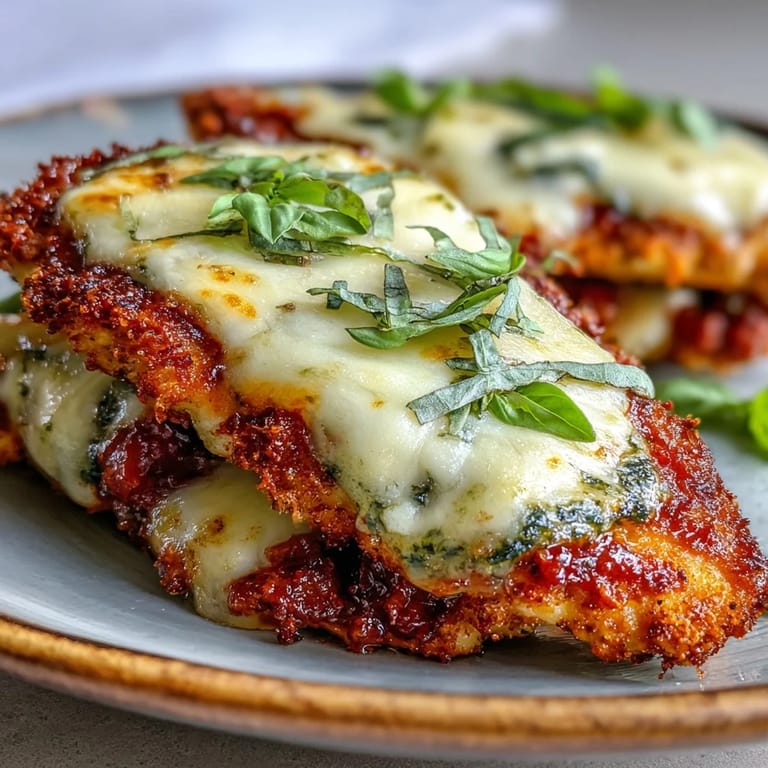
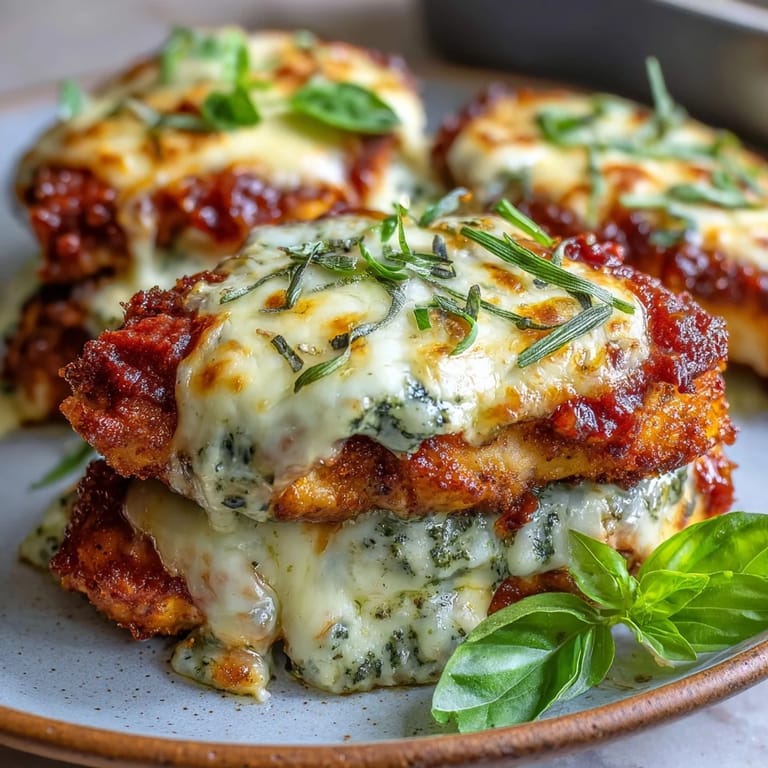
- Transfer the seared chicken to a baking dish, then spread a tablespoon or two of pesto over each piece, followed by a few spoonfuls of marinara sauce and an even scatter of both cheeses. This is where the magic happens visually.
- Bake until bubbly:
- Slide the dish into the oven and bake for fifteen to twenty minutes, watching through the window until the cheese is melted and bubbling at the edges and the internal temperature reaches 165°F. You'll know it's done when the kitchen smells impossibly good.
- Finish and serve:
- Remove from the oven and let it cool for just a minute, then scatter fresh basil over the top if you have it and serve hot alongside pasta, garlic bread, or a crisp green salad.
 Save to Pinterest
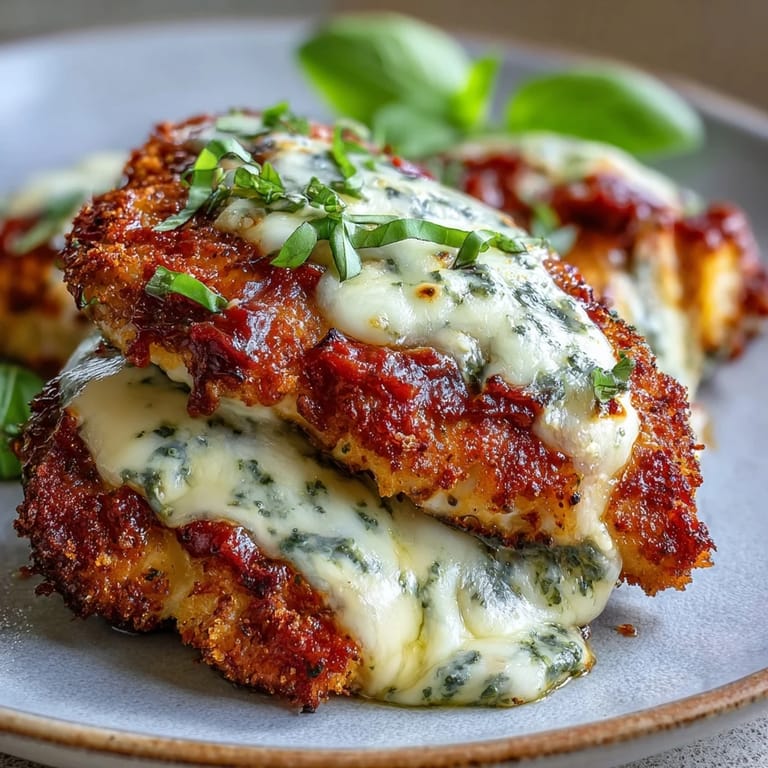
 There's something about pulling this dish from the oven when the cheese is still bubbling and the basil is just barely wilted that feels like cooking a small victory. It's the kind of meal that makes people linger at the table.
Why Pesto Changes Everything
Pesto brings this anise-like earthiness that marinara alone simply can't deliver, layering in garlic, basil, and pine nuts in a way that feels both bright and rich. I've made this with roasted garlic pesto, sun-dried tomato pesto, and even arugula pesto when basil wasn't available, and every version felt like discovering a new favorite.
The Art of Even Cooking
Pounding your chicken to a uniform thickness might seem like an extra step, but it's the difference between some pieces turning into rubber while others are still raw in the middle. I learned this the hard way after serving slightly undercooked chicken to my in-laws, and now I treat this step like the foundation it actually is.
Serving and Storage Wisdom
This dish loves being served immediately when the cheese is still cascading and warm, but it also keeps beautifully in the refrigerator for three days and reheats in a 350°F oven without losing its character. I've found that leftovers are actually perfect for lazy lunches the next day, and sometimes I deliberately make extra knowing I'll want it again.
- Pasta, garlic bread, or a simple arugula salad all make excellent companions that won't overshadow the star of the plate.
- If you're doubling this recipe for a crowd, give yourself a bit more time in the oven since the baking dish will be fuller and take longer to heat through.
- Store leftovers in an airtight container, and if the cheese gets a bit rubbery, a gentle reheat with a cover prevents it from drying further.
 Save to Pinterest
 This recipe proved to me that the best meals aren't always the most complicated—sometimes they're just about letting a few good ingredients know how to play nicely together. Make this whenever you want to feel like you're doing something impressive without the stress.
Recipe Questions
- → Can I use store-bought pesto?
Absolutely. Store-bought pesto works perfectly well in this dish. However, homemade pesto will give you the freshest flavor and allows you to control the ingredients.
- → How do I know when the chicken is done?
Use a meat thermometer to check that the internal temperature reaches 165°F (74°C). The chicken should feel firm to the touch and the juices should run clear when pierced.
- → Can I make this ahead of time?
You can bread the chicken ahead and refrigerate for up to 4 hours before cooking. Leftovers store well for up to 3 days in the refrigerator and reheat beautifully in the oven.
- → What can I serve with this?
This pairs wonderfully with pasta, garlic bread, or a crisp green salad. Roasted vegetables like broccoli or zucchini also complement the rich flavors nicely.
- → Can I freeze this dish?
You can freeze the unbreaded seasoned chicken for up to 3 months. For best results, bread and cook fresh rather than freezing the completed dish, as the texture of the cheese and breading may change.
- → How can I make this gluten-free?
Substitute the all-purpose flour with gluten-free flour blend and use gluten-free breadcrumbs. Ensure your pesto and marinara are certified gluten-free as well.