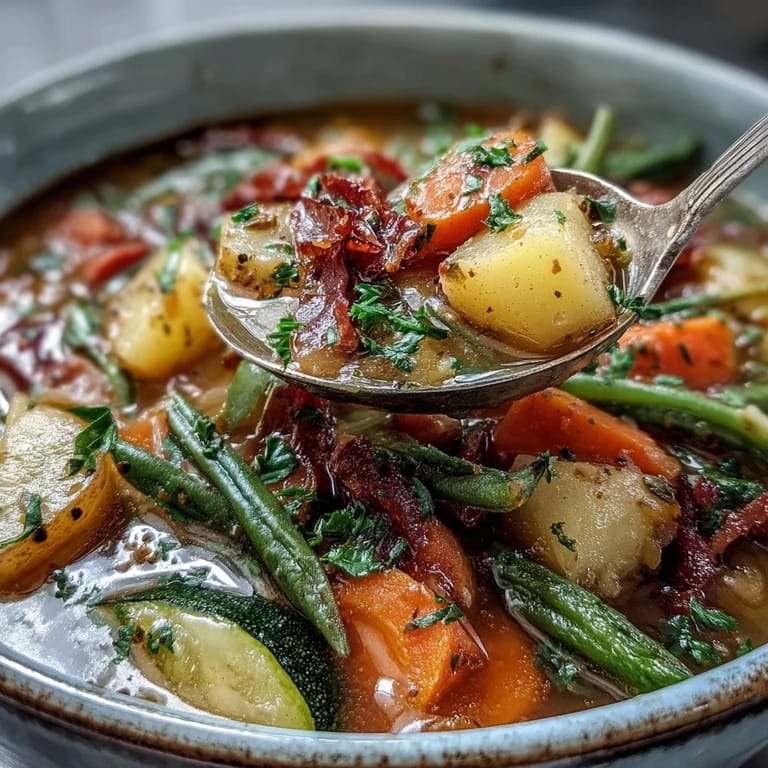
 Save to Pinterest
 The steam curling up from my grandmother's speckled blue pot always signaled something good was happening. Her potato soup wasn't fancy—just whatever vegetables needed using from the crisper drawer, a handful of herbs, and time. She'd lean against the counter, tasting from a wooden spoon, declaring it needed more salt or another minute. Those afternoons taught me that soup making is more about instinct than precision, more about comfort than complexity.
Last February, when a nasty cold kept me housebound for days, this soup became my ritual. I made a batch on Sunday and ate it for lunch through Wednesday, each day adjusting the seasoning, adding different herbs, sometimes crumbling in crackers. By the end of the week, I wasn't just better—I'd rediscovered why simple food heals more than just hunger.
Ingredients
- 3 medium potatoes: Russets hold their shape beautifully while Yukon Golds turn creamy—choose based on your texture preference
- 2 medium carrots: They add sweetness that balances the earthy potatoes
- 2 celery stalks: This aromatic foundation makes everything else taste better
- 1 medium onion: Yellow onions caramelize slightly as they cook, building depth
- 1 zucchini: Adds delicate texture without overpowering other flavors
- 1 cup green beans: Fresh ones snap beautifully, but frozen work in a pinch
- 2 cloves garlic: Minced right before adding so it stays fragrant, not bitter
- 6 cups vegetable stock: Homemade is ideal, but a quality store-bought brand works perfectly
- 1 bay leaf: The secret backbone flavor you remove before serving
- 1 teaspoon dried thyme: Earthy and warm, pairs naturally with root vegetables
- 1 teaspoon dried parsley: Brightens everything without demanding attention
- ½ teaspoon ground black pepper: Freshly cracked makes all the difference
- 1 teaspoon salt: Start here and adjust—potatoes absorb salt aggressively
- 2 tablespoons olive oil: Creates a rich base for sautéing the aromatics
- 1 cup frozen peas: Stir them in last so they stay sweet and bright green
- Fresh parsley: A handful of chopped leaves adds color and a fresh finish
Tired of Takeout? 🥡
Get 10 meals you can make faster than delivery arrives. Seriously.
One email. No spam. Unsubscribe anytime.
Instructions
- Build your flavor foundation:
- Warm olive oil in your largest pot over medium heat. Toss in onion, carrots, and celery—let them soften and become fragrant, about 5 minutes.
- Wake up the garlic:
- Stir in minced garlic and cook just until its scent fills your kitchen, maybe 60 seconds. Anything longer and it might turn bitter.
- Add the heartier vegetables:
- Dump in potatoes, green beans, and zucchini. Give everything a good stir and let them cook for 2 minutes—this helps them hold their shape later.
- Introduce the liquid and aromatics:
- Pour in your vegetable stock. Drop in bay leaf, thyme, parsley, salt, and pepper. Stir well to distribute those seasonings throughout.
- Let it simmer gently:
- Bring everything to a bubble, then lower the heat until it's just murmuring. Cover and walk away for 20 to 25 minutes—you want potatoes completely tender.
- Finish with brightness:
- Stir in frozen peas and cook for just 2 to 3 minutes more. Fish out that bay leaf before anyone accidentally bites into it.
- Serve it up:
- Ladle hot soup into bowls. Scatter fresh parsley on top if you're feeling fancy, and bring the whole pot to the table.
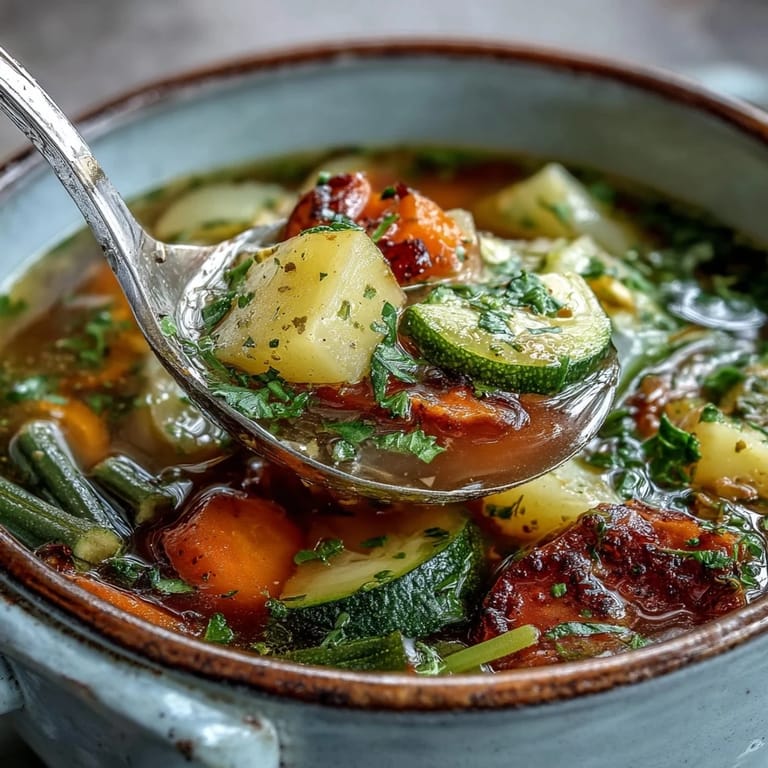 Save to Pinterest
 My friend Sarah stayed over during a rough breakup, and I made triple batch. We sat on the floor with bowls balanced on our knees, talking until midnight, eating refills until the pot was empty. She still messages me whenever she makes it, saying it tastes like friendship.
Making It Your Own
This soup welcomes whatever vegetables need using. Spinach wilts beautifully in the hot broth, corn adds sweetness, and chopped kale holds up through reheating. I've added diced tomatoes in summer and butternut squash in fall—never once regretted the experimentation.
Serving Suggestions
Crusty bread is non-negotiable for dunking, but a simple green salad with lemon vinaigrette cuts through the heartiness. For something more substantial, grilled cheese sandwiches made with sharp cheddar turn this into proper comfort food.
Storage and Make-Ahead Tips
This soup actually tastes better the next day when flavors have mingled properly. Cool completely before refrigerating in airtight containers—it keeps for 4 to 5 days. Frozen portions last 3 months, though the vegetables lose some texture when thawed.
- Leave the garnish off until serving to keep everything looking fresh
- Reheat gently over low heat, stirring occasionally
- If it looks too thick, that's normal—just thin with a splash of water or stock
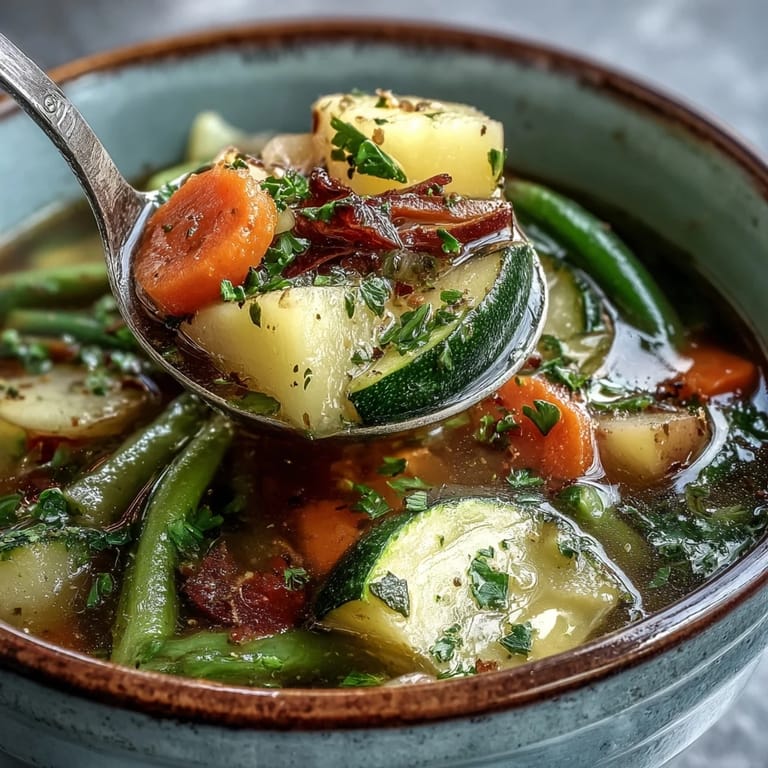 Save to Pinterest
 There's something profoundly satisfying about turning a handful of ordinary vegetables into a meal that feeds more than just hunger. Make a pot, share it, and watch how it brings people together.
Recipe Questions
- → What vegetables work best in this soup?
Potatoes, carrots, celery, onions, zucchini, and green beans form the classic base, but you can easily add corn, spinach, kale, or diced tomatoes based on what's in season.
- → How long does the soup need to simmer?
Simmer covered for 20-25 minutes until potatoes and vegetables are fork-tender. The gentle simmer allows flavors to meld while keeping vegetables intact.
- → Can I make this soup ahead of time?
Absolutely. This soup actually tastes better the next day as flavors develop. Store in the refrigerator for up to 4 days and reheat gently on the stove.
- → Is this soup freezer-friendly?
Yes, freeze cooled portions in airtight containers for up to 3 months. Thaw overnight in the refrigerator and reheat on the stove, adding a splash of broth if needed.
- → How can I add more protein?
Stir in canned white beans, chickpeas, or lentils during the last 10 minutes of cooking. For a non-vegetarian version, add shredded chicken or diced sausage.
- → What makes the broth flavorful?
The combination of bay leaf, dried thyme, parsley, black pepper, and sautéed aromatic vegetables creates a rich, savory base. Using quality vegetable stock also makes a significant difference.