 Save to Pinterest
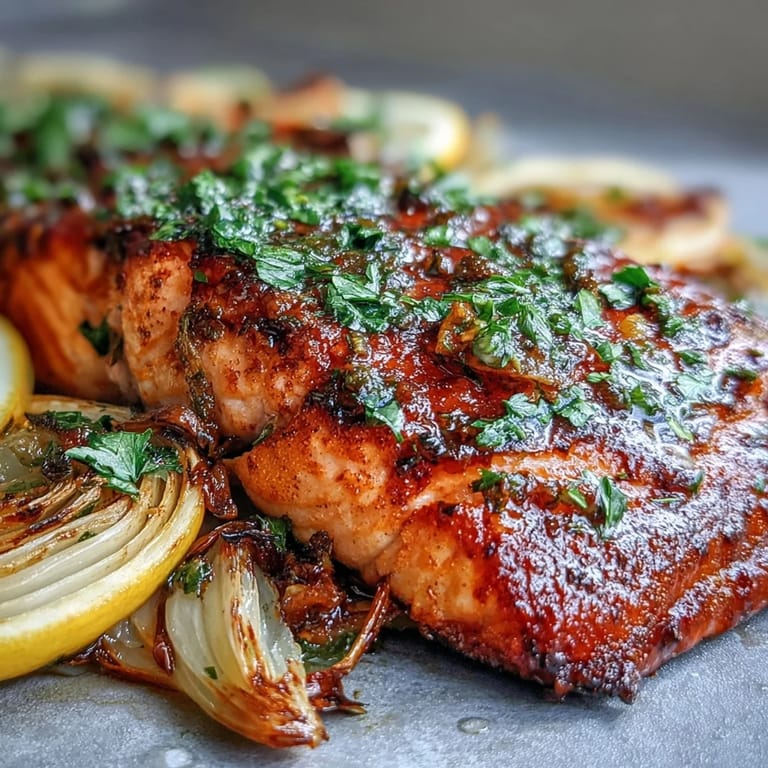
 My kitchen window was open the first time I roasted salmon with leeks, and the smell drifted out into the evening air so boldly that my neighbor texted me asking what I was making. I had bought the leeks on a whim, drawn to their pale green stalks at the farmers market, and tossed them onto a sheet pan with some onion wedges without much of a plan. When I pulled that tray from the oven, the vegetables had caramelized into something sweet and soft, and the salmon had turned out better than any fussy stovetop version I'd ever attempted. It was one of those accidental wins that immediately became a weeknight staple.
I made this for a small dinner party once, plating it straight from the oven with a generous drizzle of that green dressing, and everyone went quiet for the first few bites. One friend, who usually avoided cooking fish at home out of fear, asked me to walk her through it the next day. We stood in her kitchen with our phones on video call, and I watched her nestle those fillets among the roasted vegetables, her confidence building with every step. She sent me a photo an hour later, her own perfect pan of salmon and leeks, captioned with three exclamation points.
Ingredients
- Salmon fillets (skin-on): The skin crisps up beautifully against the hot pan and protects the flesh from drying out, so dont be tempted to remove it before roasting.
- Leeks: Slice them into thick rounds so they hold their shape and develop caramelized edges; rinse them well between the layers because they tend to trap sand and grit.
- Red onion: The wedges soften and sweeten as they roast, adding a mild, almost jammy flavor that pairs perfectly with the fish.
- Olive oil: Use a good quality oil for drizzling over the vegetables; it helps them roast evenly and adds a subtle fruity note.
- Lemon slices: These roast right on top of the salmon, infusing it with bright citrus flavor and looking gorgeous on the plate.
- Fresh flat-leaf parsley: The backbone of the dressing, it should be chopped finely so it clings to every bite of salmon without feeling too herbaceous.
- Garlic: Just one small clove, minced finely, gives the dressing a gentle sharpness without overpowering the parsley.
- Dijon mustard: A small spoonful emulsifies the dressing and adds a tangy depth that ties everything together.
- Capers: Chop them up so their briny pop distributes evenly; they add a salty, floral note that makes the dressing unforgettable.
- Lemon zest and juice: Zest first, then juice, and youll get both the fragrant oils and the acidic brightness that wakes up the whole dish.
Tired of Takeout? 🥡
Get 10 meals you can make faster than delivery arrives. Seriously.
One email. No spam. Unsubscribe anytime.
Instructions
- Preheat and Prep:
- Set your oven to 400°F and let it fully heat while you slice the leeks and onion. This ensures the vegetables start roasting immediately when they hit the pan.
- Season the Vegetables:
- Spread the leeks and onion wedges across a large baking sheet, drizzle them with olive oil, and season with salt and pepper, tossing everything with your hands to coat evenly. The oil should glisten on every piece.
- Roast the Vegetables:
- Slide the pan into the oven and roast for 10 minutes, giving the vegetables a head start so they soften and begin to caramelize. You'll start to smell the sweetness as they cook.
- Add the Salmon:
- Pull the pan out and nestle the salmon fillets skin-side down among the vegetables, then lay lemon slices over the top of each fillet. The vegetables should be sizzling slightly when you add the fish.
- Finish Roasting:
- Return the pan to the oven and roast for 12 to 15 minutes, until the salmon is just cooked through and flakes easily with a fork. The edges of the leeks should be golden and tender.
- Make the Dressing:
- While the salmon bakes, combine the parsley, garlic, mustard, capers, lemon zest, olive oil, and lemon juice in a small bowl, stirring until the mixture is bright green and cohesive. Taste and adjust the salt and pepper to your liking.
- Plate and Serve:
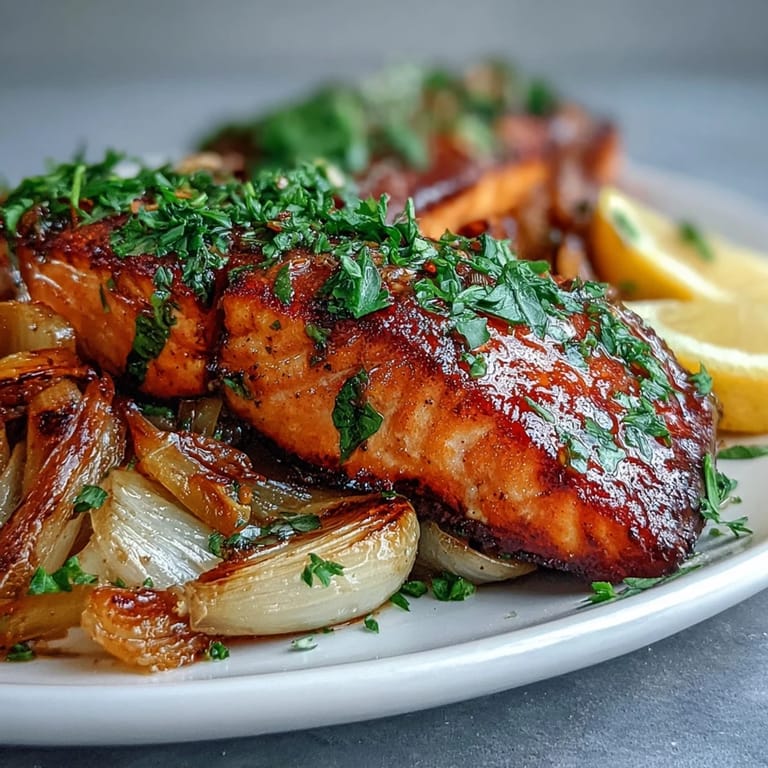
- Transfer the salmon and vegetables to plates, then spoon the parsley dressing generously over each fillet. Serve immediately while everything is hot and fragrant.
 Save to Pinterest
 There was a rainy Tuesday when I didnt feel like cooking anything complicated, and I pulled this recipe out of my back pocket. I had leftover leeks wilting in the crisper and a piece of salmon Id meant to use days earlier. As the pan roasted, the kitchen filled with warmth and the smell of caramelizing onions, and I realized that sometimes the simplest meals are the ones that feel the most like care. I ate it straight from the baking sheet with a fork, standing at the counter, and it tasted better than anything Id ordered in weeks.
Choosing Your Salmon
I used to buy whatever salmon was on sale, but I learned that thicker, center-cut fillets roast more evenly and stay moist. If you can find wild-caught salmon, the flavor is deeper and the texture firmer, though farmed salmon works perfectly well and is often more affordable. Look for fillets with bright, firm flesh and skin thats still intact, and dont be afraid to ask the fishmonger to portion them for you if theyre uneven. I keep the skin on because it crisps beautifully and makes serving easier, but you can remove it after cooking if you prefer.
Working With Leeks
Leeks can be intimidating if youve never cooked with them, but theyre incredibly forgiving once you know the trick. Trim off the dark green tops and the root end, then slice the white and light green parts into thick rounds. Run them under cold water, separating the layers gently with your fingers, because dirt and sand love to hide between the rings. I used to skip this step and ended up with gritty vegetables more than once, so now I rinse them thoroughly and pat them dry before tossing with oil. Roasting transforms them into something silky and sweet, almost like caramelized onions but with a more delicate flavor.
Making the Most of Leftovers
If you have leftover salmon and vegetables, they reheat surprisingly well and can be repurposed into entirely new meals. I flake the cold salmon over a green salad with the roasted leeks and onions, drizzling extra parsley dressing on top for a quick lunch. Youcan also toss the leftovers with hot pasta, a splash of pasta water, and a bit more olive oil for an easy next-day dinner. The dressing keeps for about three days in the fridge and is fantastic on grilled chicken, roasted potatoes, or even spread on toast with a poached egg.
- Store the salmon and vegetables separately from the dressing to keep everything fresh and prevent sogginess.
- Reheat the fish gently in a low oven or microwave to avoid drying it out.
- Double the dressing recipe if you want extra for salads or grain bowls throughout the week.
 Save to Pinterest
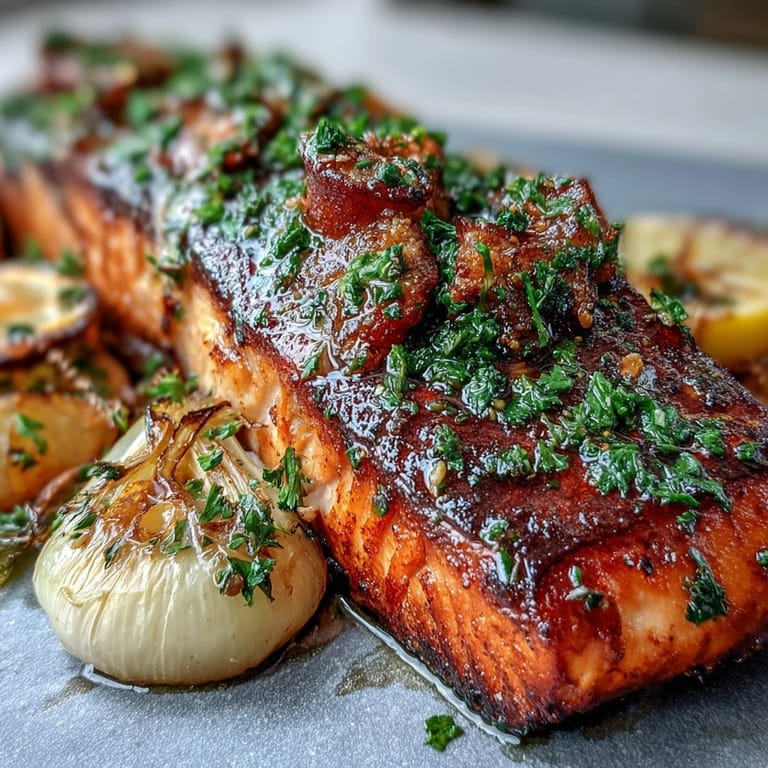
 This dish has become my answer to weeknight chaos and last-minute dinner guests alike, because it feels impressive without demanding much from me. I hope it finds a spot in your regular rotation, too.
Recipe Questions
- → Can I use frozen salmon fillets?
Yes, but ensure they are completely thawed and patted dry before roasting to achieve the best texture and even cooking.
- → What can I substitute for leeks?
You can use additional onions, shallots, or fennel bulbs sliced into wedges for a similar sweet, mild flavor profile.
- → How do I know when the salmon is perfectly cooked?
The salmon is done when it flakes easily with a fork and reaches an internal temperature of 145°F. The center should be slightly opaque.
- → Can I make the parsley dressing ahead of time?
Absolutely. Prepare the dressing up to 24 hours in advance and store it covered in the refrigerator. Stir well before serving.
- → What sides pair well with this dish?
Roasted potatoes, steamed rice, quinoa, or a simple green salad complement the salmon beautifully without overwhelming the flavors.
- → Can I use other types of fish?
Yes, trout, cod, halibut, or sea bass work wonderfully with this preparation. Adjust cooking time based on fillet thickness.