 Save to Pinterest
 There's something about the way butter melts into cream that stops time in the kitchen. The first time I made proper Alfredo, I wasn't following a recipe so much as chasing a memory of sitting in a tiny Roman trattoria, watching the chef toss fettuccine with the kind of casual confidence that made it look effortless. I went home determined to recreate that magic, and after a few attempts of either breaking the sauce or ending up with something that tasted like glue, I finally understood: it's not about fancy technique, it's about patience and the exact moment the cheese comes in. Now it's become my go-to when I need comfort on a plate, ready in under thirty minutes.
I made this for my partner on a random Tuesday when we were both exhausted, and somehow the simplicity of it felt like exactly what we needed. We sat at the kitchen counter with bowls of silky pasta, steam rising up, and didn't talk much because there wasn't anything that needed saying. That's when I realized Alfredo isn't fancy or pretentious—it's just really good comfort, the kind that makes you slow down.
Ingredients
- Fettuccine (400g): Use dried pasta if that's what you have, but fresh fettuccine will give you a silkier result that clings beautifully to the sauce.
- Unsalted butter (60g): Don't skimp on quality here—this is half the sauce, so good butter tastes like good butter.
- Heavy cream (250ml): Full-fat is non-negotiable; anything less and you'll be chasing a sauce that won't come together.
- Freshly grated Parmesan (120g): Pre-grated cheese has anti-caking agents that make the sauce grainy, which broke my heart the first time I learned that.
- Garlic clove (1, minced): Optional but honestly, skip it if you want pure butter and cheese simplicity, or use it if you want a whisper of savory depth.
- Salt, pepper, and nutmeg: The nutmeg is the secret handshake—just a pinch makes people ask what's different.
- Chicken breast (2, optional): Season well and don't overcook or it'll be tough and you'll be frustrated with yourself.
- Olive oil (2 tbsp for chicken): Medium-high heat, golden skin, rested meat—that's the rhythm.
- Fresh parsley and extra Parmesan for finishing: These aren't afterthoughts; they're the final say in what this dish becomes.
Tired of Takeout? 🥡
Get 10 meals you can make faster than delivery arrives. Seriously.
One email. No spam. Unsubscribe anytime.
Instructions
- Get the pasta water going:
- Fill a large pot with water, salt it generously—it should taste like the sea—and bring it to a rolling boil. This is your insurance policy later.
- Cook the fettuccine:
- Add pasta and stir it immediately so nothing sticks. Cook until it's just shy of fully tender, that moment where it still has a tiny bit of resistance when you bite it. Before draining, scoop out a whole cup of that starchy water and set it aside—you'll understand why in a moment.
- Sear the chicken (if you're using it):
- Pat the breasts dry, season generously, then place them in a hot skillet with oil. Don't touch them for six or seven minutes; they need to build a golden crust that keeps everything moist inside. Flip, do the same on the other side, then let them rest on a plate so they stay tender.
- Build the sauce base:
- In a large pan over medium-low heat, let the butter melt slowly—rushing this step is where things go wrong. If you're using garlic, add it now and let it whisper into the butter for thirty seconds until it stops being raw and starts being fragrant.
- Introduce the cream:
- Pour the cream in and stir constantly, bringing it to a gentle simmer where tiny bubbles form around the edges. This takes two or three minutes and it's the moment everything starts tasting like Alfredo instead of just butter and cream.
- Incorporate the Parmesan:
- Turn the heat down low—this is crucial—then gradually whisk in the cheese a handful at a time, stirring until each addition melts completely. If you dump it all in at once or crank up the heat, you'll end up with grainy scrambled-looking sauce, and that's the sound of all your effort going sideways.
- Bring pasta and sauce together:
- Toss the drained fettuccine into the sauce, coating every strand. If it looks too thick, add the reserved pasta water one splash at a time until it flows like silk, clinging to the noodles without pooling at the bottom of the plate.
- Plate and finish:
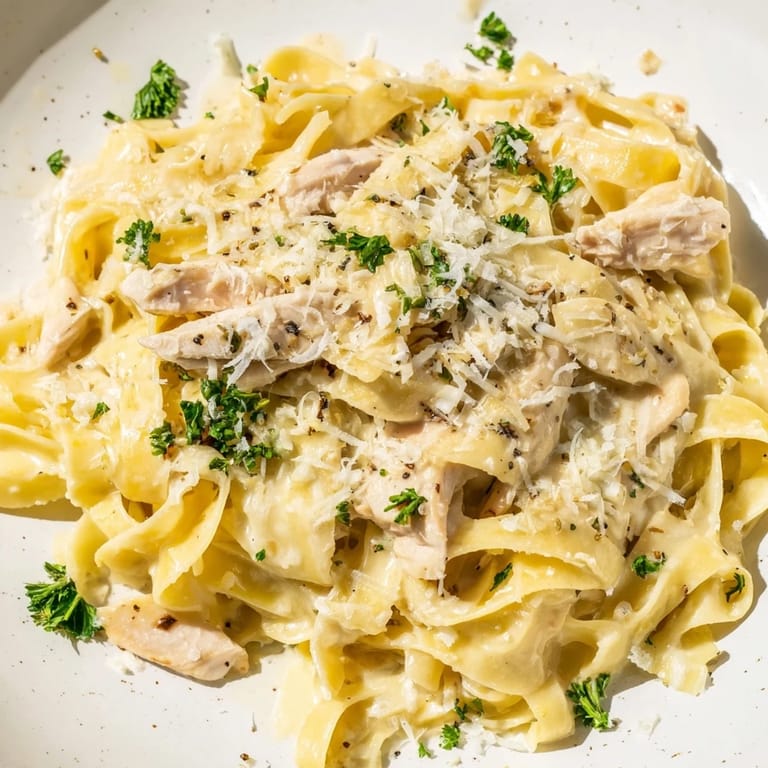
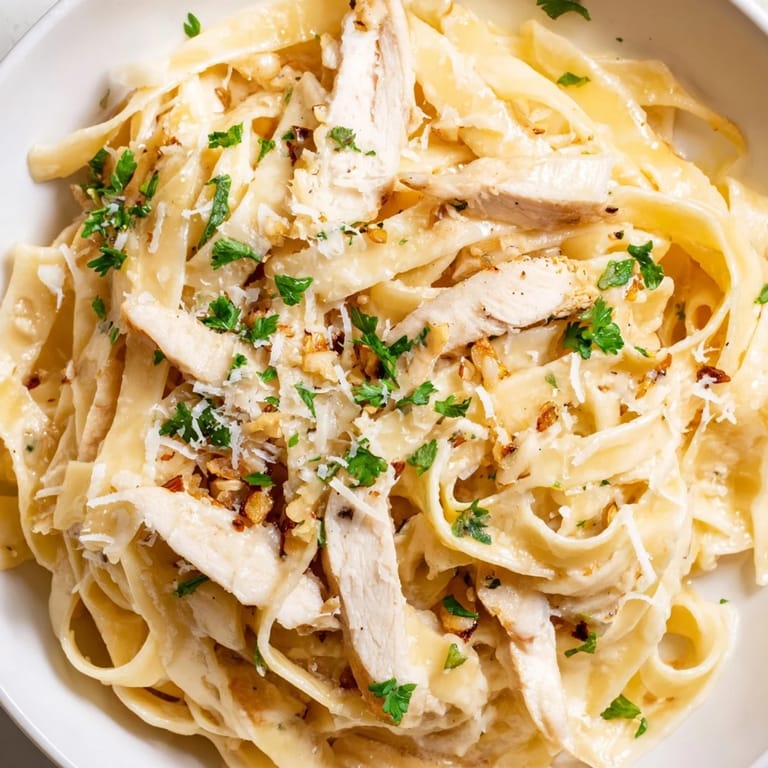
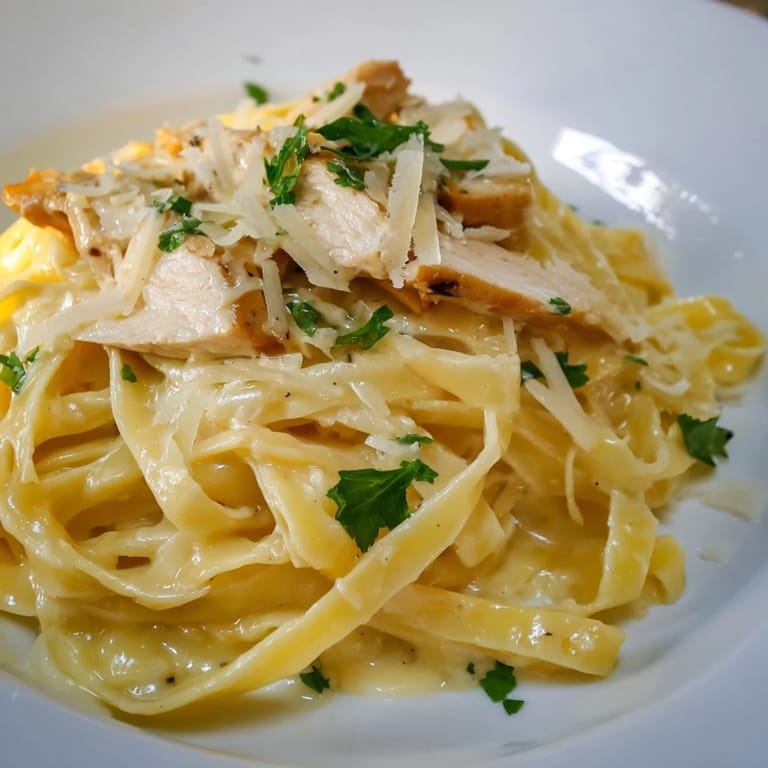
- Twirl the fettuccine onto warm plates, top with chicken if you're using it, then finish with a scatter of fresh parsley and a generous shower of extra Parmesan. Serve immediately while everything's still warm.
 Save to Pinterest
 I learned these lessons the messy way, scraping broken sauce into the compost and trying again. But that's also when cooking stopped feeling like following orders and started feeling like having a conversation with your ingredients.
Why This Works Every Time
Alfredo is proof that restraint can be louder than complexity. With only four ingredients in the sauce, there's nowhere to hide, which means each one has to be excellent and each step has to respect the others. The butter carries fat and flavor, the cream carries silk and richness, the Parmesan carries salt and depth, and the pasta carries it all together. When you're not distracted by a dozen other flavors, you actually taste what's there.
Making It Your Own
The beauty of this recipe is that it's a foundation, not a rulebook. I've made it with sautéed mushrooms on nights when I wanted earthiness, with fresh peas when spring felt important, with crispy pancetta when I was feeling indulgent, and with nothing but the core ingredients when I wanted to remember why this dish became iconic in the first place. The sauce holds all of these additions gently, letting them shine without drowning.
Pairing and Serving
This dish asks for simplicity around it—a crisp white wine like Pinot Grigio, a simple green salad with lemon dressing to cut through the richness, crusty bread to soak up every last bit of sauce. Serve it on warm plates because cold plates steal the magic. The whole experience should feel like a small pause in the day, not rushed or complicated.
- Have your pasta water ready before you start draining, so you're never scrambling with a hot, half-drained colander.
- Grate your cheese by hand right before you use it; it makes a real difference in how smoothly the sauce comes together.
- Taste and adjust the seasoning at the very end—you might want more salt, more pepper, or that tiny hint of nutmeg that changes everything.
 Save to Pinterest
 This is the kind of dish that reminds you why you cook in the first place—not to impress anyone, but to take care of yourself and whoever's sitting across from you. It's simple, it's honest, and somehow that makes it feel like home.
Recipe Questions
- → How do I achieve a creamy sauce consistency?
Simmer the butter and cream gently before whisking in Parmesan gradually. Adding reserved pasta water helps adjust the sauce to a smooth, silky texture.
- → Can I prepare this without animal products?
The base sauce relies on butter, cream, and Parmesan, but using plant-based substitutes can provide a similar creamy mouthfeel for a vegan variation.
- → What is the best way to cook the chicken for this dish?
Season skinless chicken breasts with salt and pepper, then sauté in olive oil over medium-high heat until golden and fully cooked, about 6-7 minutes per side.
- → Are there good alternatives to Parmesan cheese here?
Pecorino Romano can be used for a sharper, saltier flavor, complementing the creamy butter sauce nicely.
- → Can I add vegetables to this dish?
Sautéed mushrooms or peas make excellent additions, providing extra flavor and texture to the creamy pasta.