 Save to Pinterest
 My first real encounter with miso soup wasn't in a restaurant—it was in my neighbor's kitchen on a cold Tuesday morning when she caught me looking exhausted before work. She quietly heated water, whisked miso into a bowl with practiced ease, and handed me a steaming cup that somehow made everything feel manageable again. That simple act of care in a bowl taught me that the best comfort foods aren't complicated, they're just honest.
I made this for my roommate during finals week when she'd been living on coffee and anxiety. Watching her face soften as she took that first spoonful reminded me why Japanese grandmothers keep miso soup in their everyday rotation—it's the edible equivalent of someone believing you'll be okay.
Ingredients
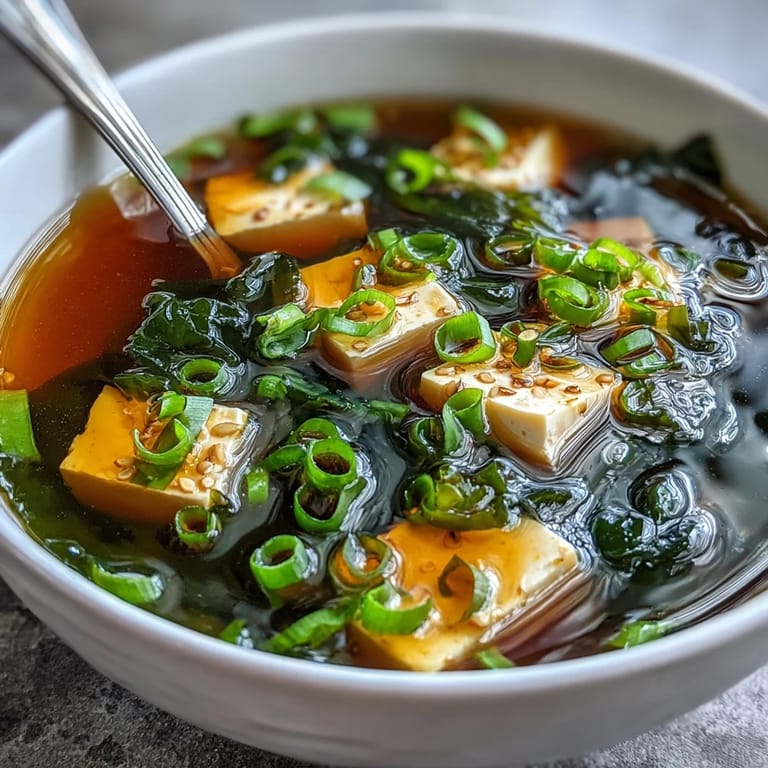
- Dashi stock (4 cups): This is the foundation—use vegetarian dashi made from kombu and shiitake if you're avoiding fish, but don't skip quality here because you'll taste every decision you made.
- White or yellow miso paste (3 tablespoons): The living, probiotic heart of this soup; buy it from a section where it's refrigerated if you can, as it's more alive than shelf-stable versions.
- Silken tofu (200 g, cut into half-inch cubes): Handle it gently—it breaks easily, which is actually part of its charm in a delicate broth like this.
- Dried wakame seaweed (2 tablespoons): This rehydrates into tender ribbons and brings mineral depth that makes the whole bowl taste like the ocean was thinking of you.
- Scallions (2, finely sliced): These are your finishing touch, bringing a bright bite that cuts through the umami and makes everything feel fresh.
Tired of Takeout? 🥡
Get 10 meals you can make faster than delivery arrives. Seriously.
One email. No spam. Unsubscribe anytime.
Instructions
- Bring your broth to a gentle simmer:
- Pour the dashi into a medium saucepan and let it warm over medium heat until small bubbles break the surface. Listen for that quiet, rolling sound—you want heat, not aggression.
- Wake up the seaweed:
- While the stock warms, drop the wakame into a small bowl of cold water and let it soften for 5 minutes, then drain it gently. It'll transform from brittle flakes into something silky and alive.
- Dissolve the miso properly:
- Scoop the miso paste into a small bowl, then ladle in some of the hot dashi and whisk until it's completely smooth and creamy. This step keeps miso from clumping and ensures its benefits stay intact.
- Add tofu and seaweed with care:
- Gently slide the tofu cubes and drained wakame into the simmering broth and let them warm for 2 to 3 minutes. The tofu will soften further, so move slowly and keep the heat low.
- Finish without boiling:
- Remove the pan from heat, then stir in your dissolved miso in a slow, deliberate motion. Never let miso soup boil after adding the paste—the heat kills the beneficial bacteria and can flatten the flavor.
- Pour and garnish:
- Ladle the soup into bowls and scatter the sliced scallions over top. Serve immediately while it's still steaming.
 Save to Pinterest
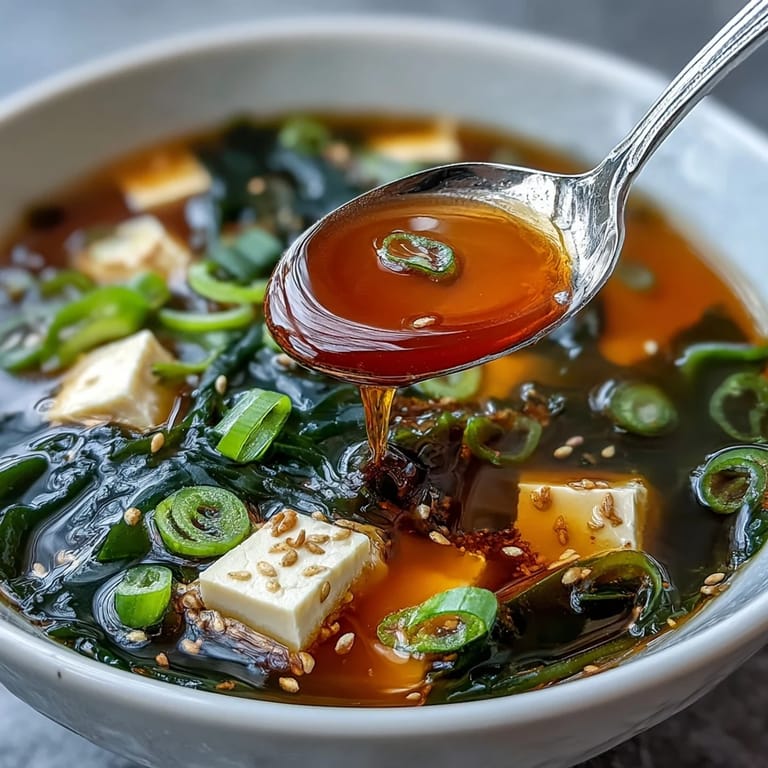
 There's something almost meditative about watching those tofu cubes float gently in the golden broth, the way the steam rises and softens your face. This soup has become my go-to when I want to feel grounded, like I'm pausing life for ten minutes and actually taking care of myself.
Layering Flavors with Miso Varieties
White miso is mild and slightly sweet, but if you want more complexity, try blending white and red miso together—use about 2 tablespoons white and 1 tablespoon red for a deeper, more savory character. I discovered this combination by accident when I grabbed the wrong container, and now it's my secret move for making this simple soup taste like someone spent hours on it. The red miso adds earthiness while the white keeps it approachable.
Building Your Vegetable Variations
The basic recipe is perfect on its own, but the beauty of miso soup is how easily it adapts to what you have. Thinly sliced mushrooms, fresh spinach, or even a few threads of nori will deepen the umami and add visual interest without changing the fundamental character of the dish. I sometimes add mushrooms when I want the soup to feel more substantial, or spinach when I need to feel like I'm eating something green and vital.
Serving and Pairing Ideas
Miso soup works equally well as a delicate starter before a larger Japanese meal or as a light, satisfying meal on its own. Pair it with steamed rice, a simple green salad, or some soft rice crackers if you want texture. Think of it as a blank canvas—it never demands attention, just quietly supports whatever else is on your table.
- Make it vegan by using kombu and shiitake-based dashi instead of anything with bonito flakes.
- Always taste before serving and adjust the miso to your preference—some people love it bold, others prefer a whisper.
- Fresh miso paste lasts longer in the refrigerator and actually develops more complex flavor as it ages.
 Save to Pinterest
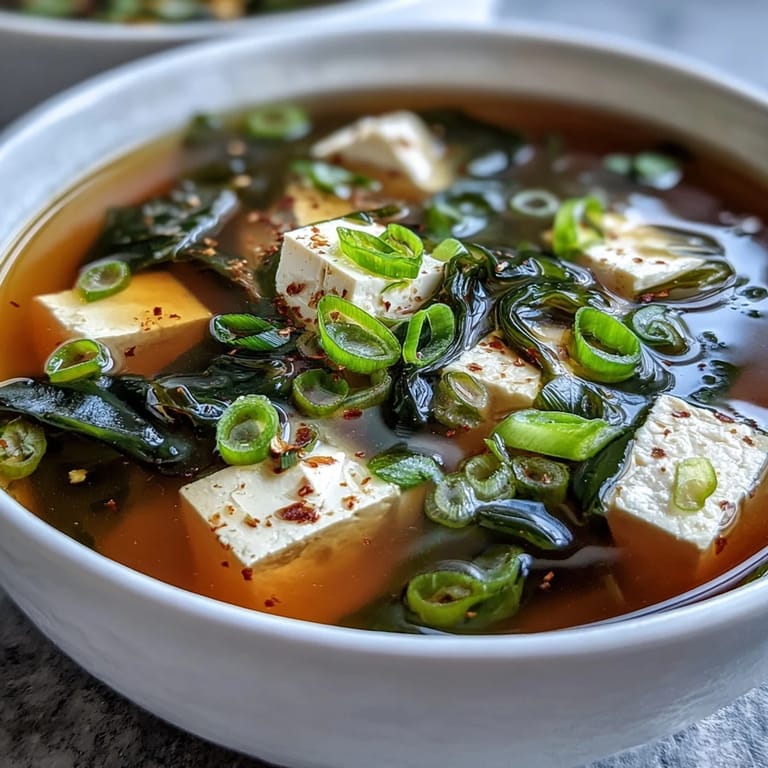
 This soup has become my quiet ritual, the thing I reach for when the world feels too loud or I need to remember that simple, honest food can be the most healing. Make it once and it becomes yours in a way that feels inevitable.
Recipe Questions
- → What type of miso works best for this soup?
White or yellow miso paste provides a mild, slightly sweet flavor that's perfect for beginners. Red miso offers a deeper, more intense taste if you prefer stronger flavors. Mixing both varieties creates balanced complexity.
- → Can I use vegetable stock instead of dashi?
Yes, vegetable stock makes a suitable substitute for dashi if you prefer a fully plant-based version. Look for Japanese-style vegetable dashi or kombu-based broths to maintain authentic flavor profiles.
- → Why shouldn't I boil the soup after adding miso?
Boiling miso paste destroys beneficial probiotics and enzymes while creating a grainy texture. Always remove the soup from heat before stirring in dissolved miso to preserve both nutritional value and smooth consistency.
- → How long can I store leftover miso soup?
Store leftovers in an airtight container in the refrigerator for up to 2-3 days. Reheat gently without boiling, though the tofu may become slightly softer and texture may change slightly.
- → What vegetables can I add to customize this soup?
Sliced shiitake mushrooms, fresh spinach, bok choy, or daikon radish make excellent additions. Add hearty vegetables during simmering, but stir in delicate greens like spinach after removing from heat.
- → Is silken tofu the only option?
Silken tofu provides the traditional delicate texture, but soft or medium-firm tofu works if you prefer more substantial cubes. Press firmer varieties briefly before adding to prevent excessive crumbling.