 Save to Pinterest
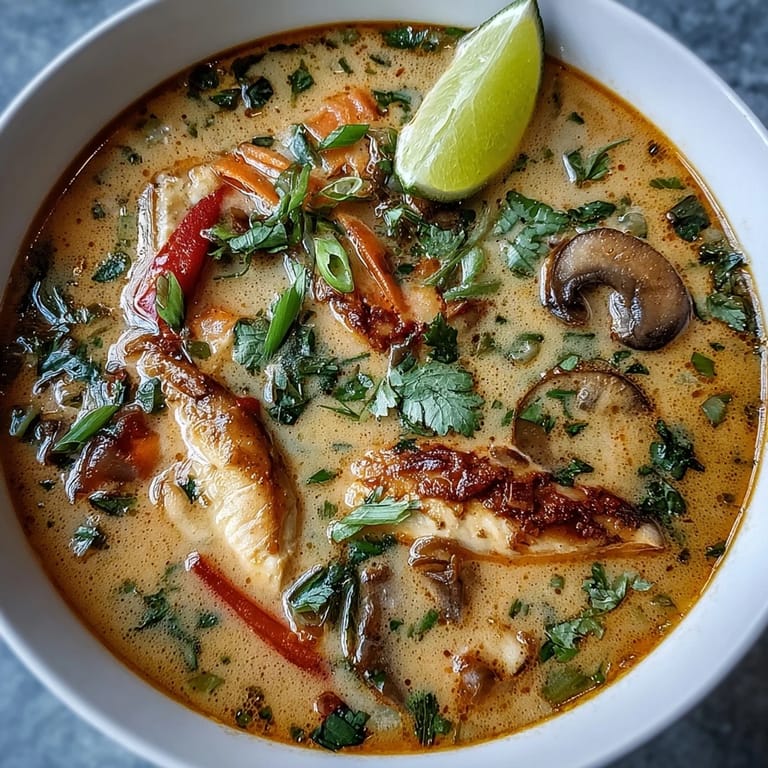
 There's something about the sound of coconut milk hitting a hot pan that tells you you're about to make something special. My first Thai curry soup came together on a Tuesday night when I had nothing but tired ingredients and high expectations, yet somehow the kitchen filled with this intoxicating aroma that made everyone stop what they were doing. What started as an experiment became the dish I now make whenever I need comfort wrapped in warmth and spice. The creamy broth, tender chicken, and those jewel-bright vegetables create something that feels both simple and luxurious at once.
I made this for my friend Sarah on a rainy Sunday, and watching her face light up after that first spoonful reminded me why home cooking matters. She kept asking for the recipe, and I realized halfway through explaining that I'd written it down years ago but kept adjusting it based on what I had on hand. That's when I knew this wasn't just my curry soup anymore—it was becoming something to pass along.
Ingredients
- Chicken breast or thighs: Thighs give you more forgiving, tender meat, but breasts work fine if you slice them thin so they cook evenly in the broth.
- Mushrooms: Shiitake adds earthiness that plays beautifully against the coconut, though button mushrooms are reliable and budget-friendly.
- Carrots: Thin slicing matters here because they cook quickly and become sweet, balancing the heat of the curry.
- Red bell pepper: It softens gently and adds a subtle sweetness without overpowering the coconut broth.
- Ginger and garlic: Fresh is non-negotiable—they're the foundation that makes this taste authentic rather than like a sauce-jar approximation.
- Lemongrass: Optional but worth seeking out; it adds a citrus note that's impossible to replicate with anything else.
- Red curry paste: Buy a good brand in a jar or can, and know that a little goes a long way—you can always add more but you can't take it back.
- Coconut milk: Full fat feels luxurious, but light coconut milk keeps things from becoming too heavy if you're eating this regularly.
- Fish sauce: Trust me on this; it sounds intimidating but it's what makes everything taste authentically Thai, and the smell mellows completely once it's cooked in.
- Brown sugar and lime: These two balance each other—the sugar rounds out the heat and sourness, while lime juice brightens every spoonful.
Tired of Takeout? 🥡
Get 10 meals you can make faster than delivery arrives. Seriously.
One email. No spam. Unsubscribe anytime.
Instructions
- Build your aromatics base:
- Heat oil in your pot and let the ginger, garlic, and lemongrass soften for about a minute—you'll smell when it's ready, and that's your signal everything's about to get delicious. The edges of the garlic might turn golden, which is exactly what you want.
- Toast the curry paste:
- Stir it into the warm oil for another minute, and you'll see it deepen in color and smell even more complex. This step wakes up all the spices in the paste so they taste bolder.
- Coat and cook the chicken:
- Add your chicken slices and stir them through the curry until they're all covered in that red paste, cooking for a few minutes until the edges turn opaque. This seals in flavor and keeps the meat tender.
- Pour in your broth and coconut milk:
- Watch as the liquid blooms from pale to a rich coral color—this is where the real transformation happens. Add the carrots, mushrooms, pepper, and kaffir leaves if you're using them.
- Simmer gently until everything is tender:
- This takes about 10 to 12 minutes, and you're listening for a gentle bubble rather than a rolling boil, which would toughen the chicken. The vegetables soften gradually and release their own sweetness into the broth.
- Season and taste as you go:
- Add the fish sauce, brown sugar, and lime juice, then taste before you finish—this is where you become the cook rather than just following orders. Some days you might want more spice, other days more brightness from the lime.
- Wilt the greens at the last moment:
- If you're using spinach or bok choy, add it just before serving so it stays vibrant and has a gentle bite rather than turning mushy.
- Finish with fresh garnishes:
- Spring onions, cilantro, fresh chili, and a wedge of lime aren't just decoration—they add fresh brightness that makes you taste the coconut and spice in a new way.
 Save to Pinterest
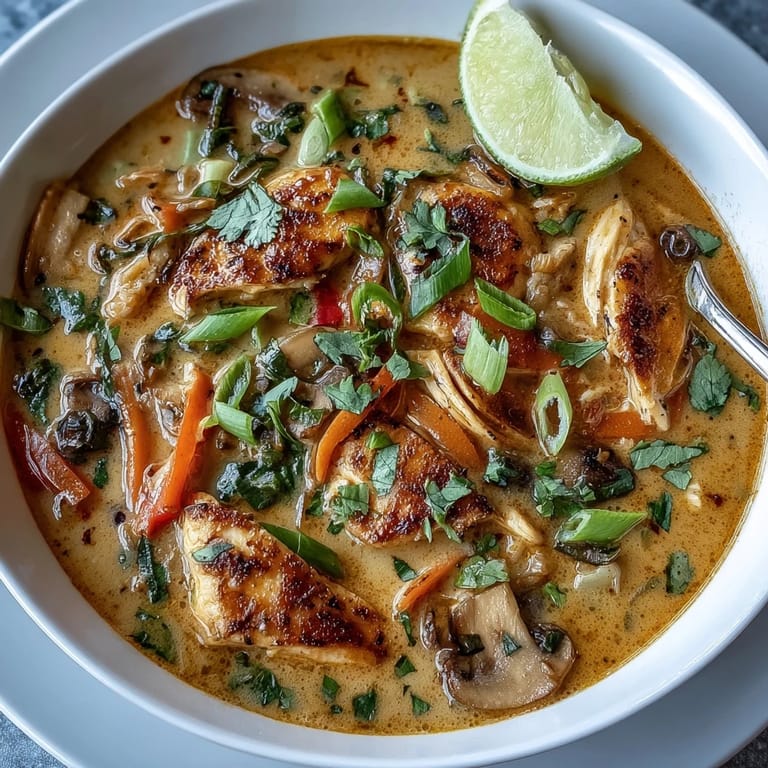
 What strikes me most about making this soup is how it transforms a simple Monday into something that feels like occasion. I've learned that feeding people something that asks them to slow down and really taste it—the layers of coconut, the slow heat building, the way lime cuts through everything—creates a moment that stays with them.
Making It Your Own
This recipe is a starting point, not a rule book. I've made versions with shrimp instead of chicken when I wanted something lighter, and versions loaded with extra mushrooms when that's what I had. Tofu works beautifully if you're cooking for vegetarians—just use vegetable broth and tamari instead of fish sauce, and add it toward the end so it doesn't fall apart.
The Spice Question
Here's the thing about heat: it's personal and it builds. Start with less curry paste than you think you need, taste it, and add more if you want to turn up the volume. I learned this the hard way by making it searingly hot for someone who thought they wanted it that way, only to watch them dilute it with broth halfway through. The best version is the one that makes you happy, not the one that proves something.
Serving and Pairing
This soup is substantial enough to stand alone as a meal, but there's something satisfying about eating it alongside jasmine rice or rice noodles. You get the comfort of something to soak up the broth, and the soup becomes even more of an event. If you're serving it to guests, set out the lime wedges and extra cilantro so people can adjust the brightness to their taste, which makes them feel like they're part of the cooking.
- A crisp white wine like Riesling or Gewürztraminer echoes the citrus and floral notes without competing with the spice.
- Serve it in wide bowls so the broth has room to pool and showcase those gorgeous vegetables.
- Make it ahead and reheat gently—the flavors actually deepen as it sits, making it perfect for meal prep or feeding a crowd.
 Save to Pinterest
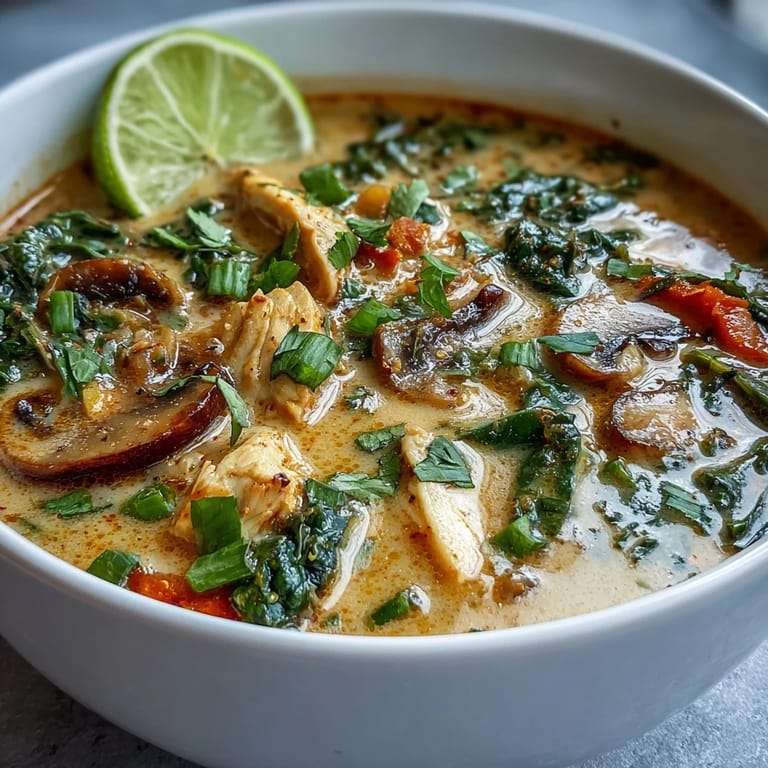
 Every time I make this soup, I'm reminded that the best recipes are the ones that taste like home because you've cooked them enough to make them yours. This is one of those dishes.
Recipe Questions
- → Can I substitute chicken with other proteins?
Yes, shrimp or tofu are great alternatives. For vegetarian options, use vegetable broth and soy sauce instead of fish sauce.
- → How can I adjust the spice level?
Modify the amount of red curry paste according to your heat preference to make it milder or spicier.
- → What vegetables complement this dish well?
Mushrooms, carrots, red bell pepper, and leafy greens like spinach or bok choy provide texture and balance.
- → Are there common allergens to be aware of?
This bowl contains fish sauce and coconut. Check curry paste and broth labels for potential allergen traces.
- → What can be served alongside for a complete meal?
Serve with jasmine rice or rice noodles to enhance the meal's heartiness and soak up the flavorful broth.