 Save to Pinterest
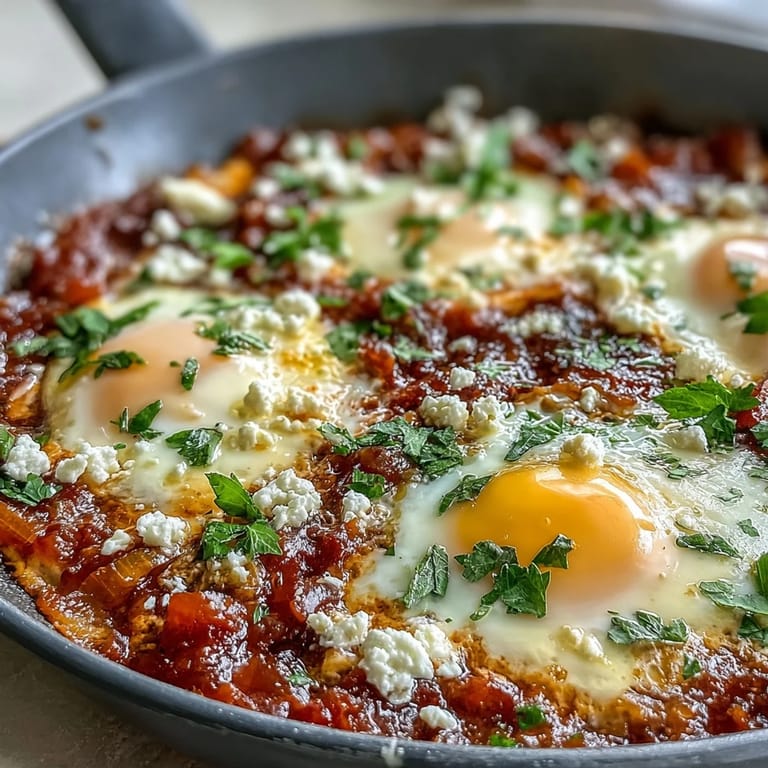
 There's something about the smell of cumin hitting hot oil that instantly transports me back to a tiny kitchen in Marrakech, where a friend's grandmother was stirring a pan of shakshuka while morning light flooded through an arched window. She didn't measure anything, just cooked with her hands and her intuition, cracking eggs into that crimson sauce like she was tucking them into bed. That morning changed how I think about breakfast entirely, and now whenever I make this dish, I'm chasing that same feeling of warmth and simplicity.
I made this for my partner last Sunday morning when we were both running on fumes from the week before, and somehow this humble pan of eggs and tomatoes felt like the most generous thing I could offer. The house filled with that golden spice smell, and we sat at the kitchen counter without saying much, just tearing bread and soaking it in that gorgeous sauce. That's when I realized shakshuka isn't really about the ingredients at all—it's about slowing down.
Ingredients
- Olive oil: Use a generous pour here, at least 2 tablespoons, because this is where the flavor foundation begins the moment it hits the heat.
- Onion and red bell pepper: The softer they get, the sweeter they become, so don't rush this step even though it's tempting to move ahead.
- Garlic and chili pepper: Garlic burns faster than you'd think, so add it after the peppers soften and keep the heat honest.
- Crushed tomatoes: Canned tomatoes work beautifully here because their acidity balances the spices, but fresh tomatoes from late summer are pure magic if you can get them.
- Ground cumin, paprika, and coriander: These three are the soul of the dish, so taste as you go and don't be shy with them.
- Eggs: Room temperature eggs slide into the sauce more gently than cold ones, making them less likely to crack.
- Fresh parsley or cilantro: This isn't decoration—it's brightness that cuts through the richness and makes every bite feel alive.
- Feta cheese: Optional but not really, because those salty crumbles turn this from good to unforgettable.
Tired of Takeout? 🥡
Get 10 meals you can make faster than delivery arrives. Seriously.
One email. No spam. Unsubscribe anytime.
Instructions
- Start with oil and aroma:
- Pour that olive oil into your skillet and let it warm over medium heat until it shimmers—you'll know it's ready when the kitchen starts smelling like possibility. This takes about a minute, and it's worth waiting for.
- Build the base:
- Toss in your diced onion and bell pepper, stirring occasionally for about 5 to 7 minutes until they soften and the edges start turning golden. You're not rushing this; you're coaxing out their sweetness, and patience here changes everything.
- Add the pungent notes:
- Stir in your minced garlic and finely chopped chili pepper, cooking for just about a minute so the garlic turns fragrant but not brown. That one minute is crucial because burnt garlic tastes bitter and angry, not warm and welcoming.
- Bring in the tomato base:
- Pour in your crushed tomatoes along with the cumin, paprika, coriander, cayenne if you're using it, and a good pinch of salt and pepper. Stir everything together until the spices are fully distributed and the sauce looks like a warm, spiced sunset.
- Let it simmer and thicken:
- Leave the pan uncovered and let it bubble gently for about 10 to 12 minutes, stirring occasionally, until the sauce becomes noticeably thicker and deeper in color. You'll know it's ready when there's less liquid than when you started, and the tomatoes have broken down into something cohesive.
- Create the egg nests:
- Using the back of a spoon, gently create four little wells in the sauce, spacing them evenly around the pan. These wells are where your eggs will nestle, cradled by all that spiced warmth.
- Crack and cover:
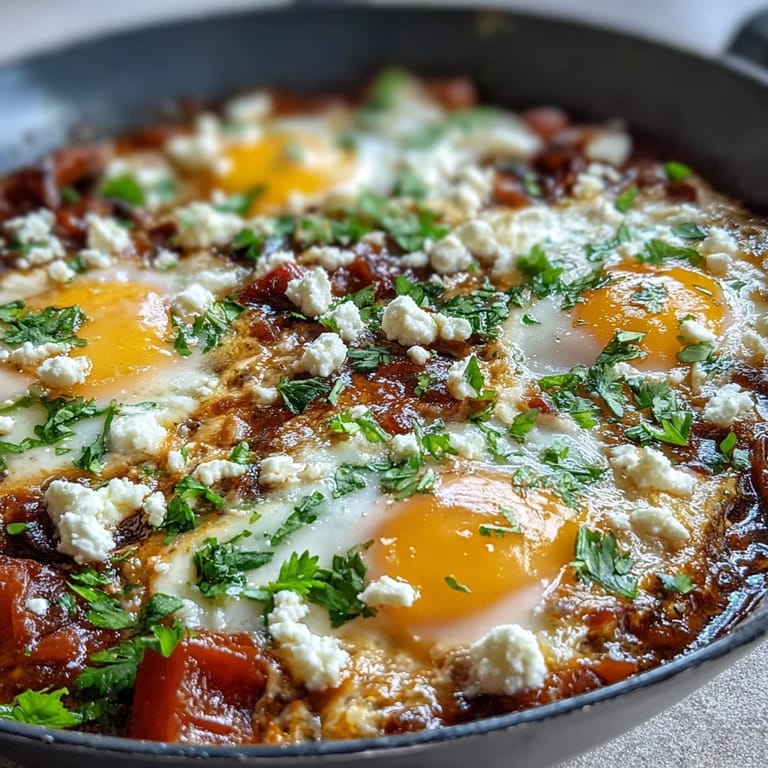
- Carefully crack one egg into each well, then cover the pan and turn the heat down to medium-low, letting everything cook undisturbed for 6 to 8 minutes. The cover traps the steam, which gently cooks the whites while the yolk stays luxuriously runny—that's the goal here.
- Finish with life:
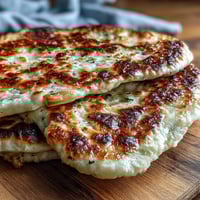
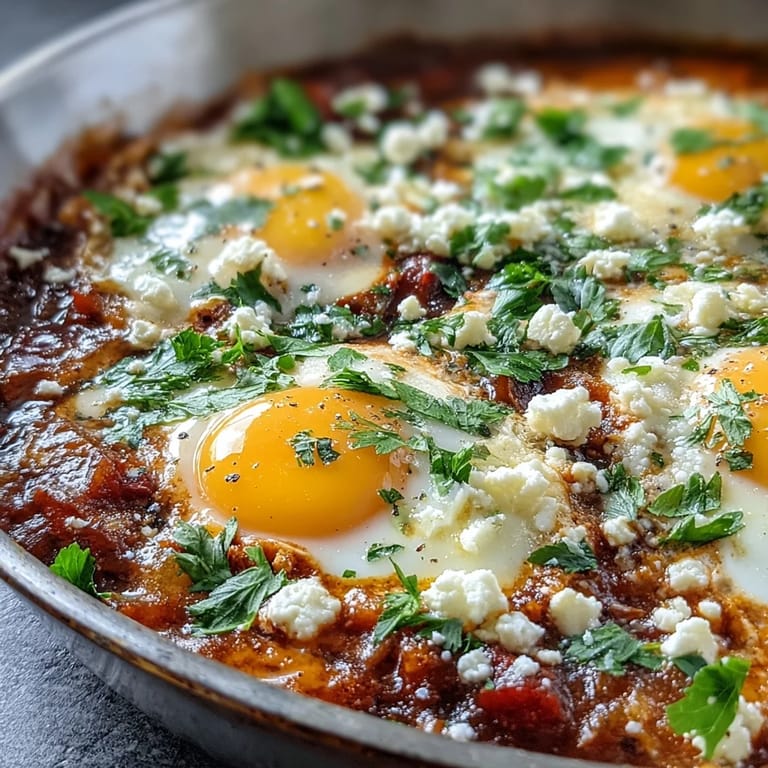
- Remove from heat and scatter your fresh parsley or cilantro across the top, add crumbled feta if you're using it, and serve immediately with crusty bread or warm pita for soaking up every drop of sauce.
 Save to Pinterest
 I've learned that some of my best mornings have started with food that wasn't complicated or showy, just honest and generous. Shakshuka taught me that—the way it transforms a handful of pantry staples into something that tastes like care and attention. Now it's the dish I make when I want to turn an ordinary Tuesday morning into something memorable.
Why Spices Matter So Much Here
When I first made shakshuka with just tomatoes and eggs, it was fine but forgettable. Then someone told me to bloom the spices in that initial oil, and everything shifted—suddenly the cumin and paprika weren't just flavor, they were the entire personality of the dish. These aren't distant background notes; they're what makes this feel like something from somewhere, something with roots and tradition and soul.
The Importance of Your Pan
A large skillet with a lid changed my shakshuka game completely because those shallow sides make it easy to create egg wells, and the lid traps steam so perfectly that your eggs cook gently instead of aggressively. I learned this the hard way with a saucepan that was too deep and didn't have a proper cover—the eggs took forever and the whites got weird and rubbery. The right tool isn't just convenience; it's actually part of the technique.
Serving and Storage Wisdom
Shakshuka is best eaten within minutes of cooking, while everything is still steaming and the yolks are warm enough to run. Make it just before people are ready to eat, and have your bread already sliced because this isn't a dish that waits patiently—it's meant to be devoured while it's glorious.
- If you have leftovers, cool them completely and store in an airtight container in the fridge for up to three days, though honestly the magic fades after a few hours.
- You can reheat shakshuka gently over low heat or in a 300°F oven, but don't expect the eggs to stay runny—they'll firm up completely.
- Consider making the sauce ahead of time and keeping it in the fridge, then poaching your eggs fresh when you're ready to serve.
 Save to Pinterest
 Make this dish when you want breakfast to feel like breakfast, not just fuel. It's the kind of cooking that reminds you why people gather around tables in the first place.
Recipe Questions
- → What is shakshuka?
Shakshuka is a Middle Eastern and North African dish of eggs poached in a spiced tomato sauce, typically served for breakfast with bread.
- → How do I know when the eggs are done?
The whites should be fully set and opaque while the yolks remain slightly runny. This usually takes 6-8 minutes covered.
- → Can I make this ahead?
The tomato sauce base can be made ahead and refrigerated for up to 3 days. Reheat gently before adding eggs.
- → What should I serve with shakshuka?
Crusty bread, warm pita, or flatbread are traditional accompaniments for dipping into the sauce and runny yolks.
- → Is shakshuka spicy?
The heat level is adjustable. Cayenne and chili pepper add warmth, but can be reduced or omitted for a milder version.